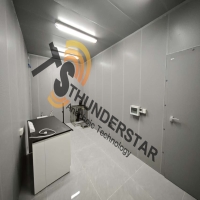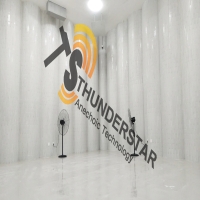






Adjustable Reverberation Listening Room: Recreate RealLife Acoustic Environments for Diverse Auditory Evaluation
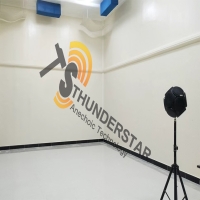
During loudspeaker development, building acoustic simulation, household acoustic assessment and subjective audio evaluation, the acoustic properties of a room will significantly alter human auditory perception. The same sound source will deliver totally different listening experience inside a compact room compared with a spacious hall. Conventional listening rooms with fixed acoustic parameters only provide single reverberation condition, which cannot reproduce the wide variety of real-world indoor environments, creating bottlenecks for audio R&D and building-acoustic test projects. The adjustable reverberation listening room adopts switchable sound-absorbing and reflective components to modify sound-energy decay inside the chamber, enabling dynamic adjustment of reverberation time and simulating acoustic conditions of different building spaces.
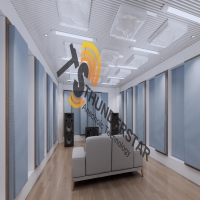
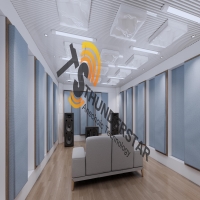
Different from ordinary fixed-parameter listening rooms, switchable panels are installed on walls or ceilings. These modules can shift between high-reflection mode and high-absorption mode without major civil reconstruction, delivering adjustable reverberation within target range. It is capable of simulating short reverberation of small residential apartments, as well as acoustic features of living rooms, offices and medium-sized halls. It supplies realistic test surroundings for subjective listening assessment, loudspeaker tuning, comparative testing of doors, windows and interior decoration materials.
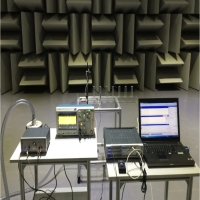
Audio manufacturers rely heavily on such facilities for subjective evaluation of speakers, smart audio devices and headphones. Since consumer products will be used in countless household spaces with varied room acoustics, engineers need adjustable reverberation conditions to verify product performance under multiple simulated scenarios. It is also widely applied in building-acoustic research. New wall panels and interior furnishing components can be compared under variable reverberation settings to observe how materials influence human listening perception. Universities and research institutes utilise this lab facility for psychoacoustics and auditory-perception studies.
In practical implementation, external sound insulation shall be properly handled to block traffic noise and mechanical noise from outside and avoid disturbance to subjective listening judgement. Ventilation silencing configuration is required to suppress fan operating noise. Projects differ in reverberation adjustment range. Some applications only cover typical residential reverberation band, while scientific research requires broader tuning span. In early design phase, engineers shall define technical targets based on test purposes, sample dimensions and operator quantity, arrange switchable absorbing-reflective modules reasonably and guarantee satisfactory sound-field uniformity.
Many stakeholders tend to confuse adjustable reverberation listening rooms with reverberation chambers or standard listening rooms. Reverberation chambers focus on objective material acoustic measurement and pursue diffuse sound field. Standard listening rooms work under one fixed acoustic state. By contrast, adjustable reverberation listening rooms prioritise subjective auditory assessment, with its core advantage lying in flexible working conditions to replicate real-life living spaces. Apart from switchable acoustic modules, observation windows, sample placement stations, audio signal interfaces and operator zones should be planned according to business requirements. For consumer-audio development, interior-acoustic evaluation and academic auditory research, adjustable reverberation listening rooms provide multi-condition auditory test surroundings, supporting engineers and researchers to carry out assessment close to real-world application scenarios.
Leave your reply
Your email address will not be published. Required fields are marked *